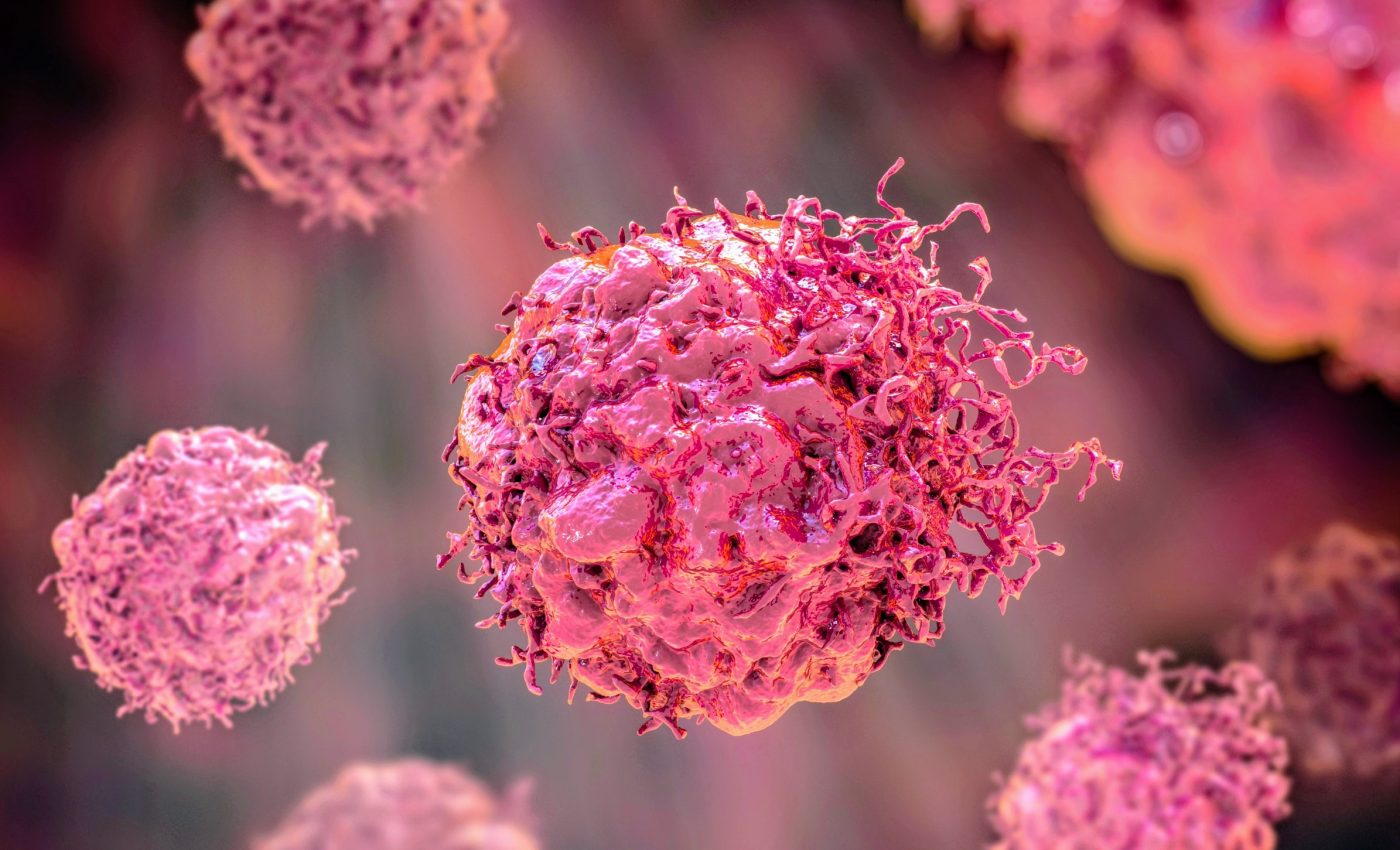
Imagine a world where cancer isn’t attacked, burned, or poisoned—but gently reprogrammed back to health. That future may be closer than we think. In a groundbreaking advance, researchers in South Korea have developed a technology that can revert cancer cells to their normal state, potentially eliminating the need for chemotherapy or radiation altogether.
The breakthrough, led by scientists at the Korea Advanced Institute of Science and Technology (KAIST), offers a radically new way to treat one of humanity’s deadliest diseases. Using sophisticated computational models, the team mapped the complex web of gene interactions inside cancer cells and pinpointed key molecular “switches” that determine whether a cell becomes malignant.
By targeting these switches, they successfully reprogrammed harmful cancer cells into healthy, functioning ones—without damaging nearby tissue. It’s a dramatic shift from conventional treatments, which often kill healthy cells in the fight to eliminate tumors.
The promise is enormous: fewer side effects, highly personalized therapies, and an approach that heals rather than destroys. Though more research and clinical trials lie ahead, this discovery signals a new era in oncology—one where the goal may not be to kill cancer, but to turn it off and restore what’s been lost.

✅ What the breakthrough says
- The work was done by researchers at KAIST (Korea Advanced Institute of Science and Technology), led by Kwang‑Hyun Cho and his team.
- They developed a method to map the gene-regulatory network underlying how normal colon cells become cancerous. Using data from single-cell RNA sequencing, they created a “digital twin” — a computational model replicating how genes interact during cell differentiation
- From that model, they identified certain “molecular switches” — genes or regulators which, when modified, can reverse the cell’s state. When these switches were applied to colon-cancer cells, the cells regained characteristics of normal colon cells. This was confirmed in cell experiments and in animal models.
- In other words: instead of killing cancer cells (as chemotherapy, radiation, etc. do), this approach reprograms them — turning them back toward a healthy state.
The published study showing this — titled Control of Cellular Differentiation Trajectories for Cancer Reversion — appears in the journal Advanced Science.
⚠️ What it doesn’t yet mean — and important caveats
- So far the success is in colon-cancer cells. The experiments involved colon-cancer cell lines (and organoids derived from human colon tissue) and animal tests This does not guarantee the method will work for all types of cancer (e.g. lung, breast, brain cancers) — those may have different biology.
- The approach relies on detailed gene-regulation maps. It’s uncertain how easily this can be adapted for cancers with highly complex or unstable genetic changes.
- Treatment in humans is still hypothetical. Even though cells regained “normal-like” properties in lab/animal models, that does not mean the cells are identical to healthy cells, or that the reversion would be stable over long time periods.
- Also: “revert to normal” doesn’t necessarily mean “cure everyone.” Cancer is not just about rogue cells — there can be genetic instability, immune system factors, tumor microenvironment, etc. This method addresses one aspect (cell-state reversion), but many challenges remain before it becomes a human therapy.

🌍 Why this matters (if it pans out)
- If this approach can be expanded to various cancer types, it could revolutionize cancer therapy — shifting from destructive treatments (chemo / radiation) to restorative therapies that rebuild healthy tissue.
- It could mean fewer side-effects: because the method doesn’t kill cells wholesale, but re-educates them, there may be less collateral damage to healthy tissue and fewer long-term side effects.
- It opens a new paradigm: viewing cancer not only as “cells to be destroyed,” but as a problem of cell-state misregulation — and potentially fixable via reprogramming/regulation.
- It may reduce recurrence: traditional treatments often leave behind resistant cells; reprogramming might avoid that by restoring cell identity rather than simply removing cells.
📅 What’s next — Where research will likely go from here
- Researchers will likely attempt to test this reversion approach in other cancer types beyond colon cancer.
- Long-term studies will be needed to see whether reverted cells remain stable (i.e. don’t turn cancerous again) and behave like true healthy cells.
- Eventually — if all goes well — preclinical trials may lead to human clinical trials. That would be years away, but this is a hopeful foundational step.
- Scientists may refine the molecular-switch mechanisms, identify safer/efficient ways to trigger reversal, and check for unintended effects (e.g. over-growth, other genetic changes, immune reactions).